
What Institutional Investors Test Beyond the Pitch Deck

The deck opens the conversation. Diligence tests it.
A pitch deck sets out the problem, the solution, the market, the team, the traction, and the funding requirement. It is built to persuade, which is a legitimate function.
But persuasion is not evidence. When an institutional investor moves from initial interest to formal evaluation, the standard changes: the question is no longer whether the company looks promising, but whether it can substantiate what it has said. That shift separates a company that presents itself well from one ready to absorb institutional capital.
Why verification falls more heavily on the company in Saudi Arabia
Research by Al Harbi, Cordina and Power (2026) in the Thunderbird International Business Review, drawing on interviews with 24 venture capital investors in Saudi Arabia, found that they apply globally recognisable diligence structures within an information environment marked by limited reliable market data, uneven disclosure, and strong confidentiality around deal terms, valuations, and revenues. These conditions, it reports, lead them to rely on cross-checking, triangulation, and judgement, reconciling founder narratives against financial records.
The consequence is practical rather than absolute. External checks remain available, and the study describes investors using them. But in our experience they are assembled deal by deal from parties approached individually rather than drawn from a standing public record — slower, narrower, more dependent on access — so the company's own documentation becomes the reference point those checks are measured against, and more of the verification effort falls on the company than in a data-rich market.
Market composition compounds this: MAGNiTT's FY2025 report records 194 investors backing Saudi startups, up 38% year on year, with international investors accounting for 34% of all investors, up from 28% in 2024. A broader, more international investor base does not by itself imply stricter diligence. It tends to mean more counterparties arriving without prior relationships, local referrals, or informal knowledge of the company, and therefore more dependence on what documentation can demonstrate.
From narrative to evidence
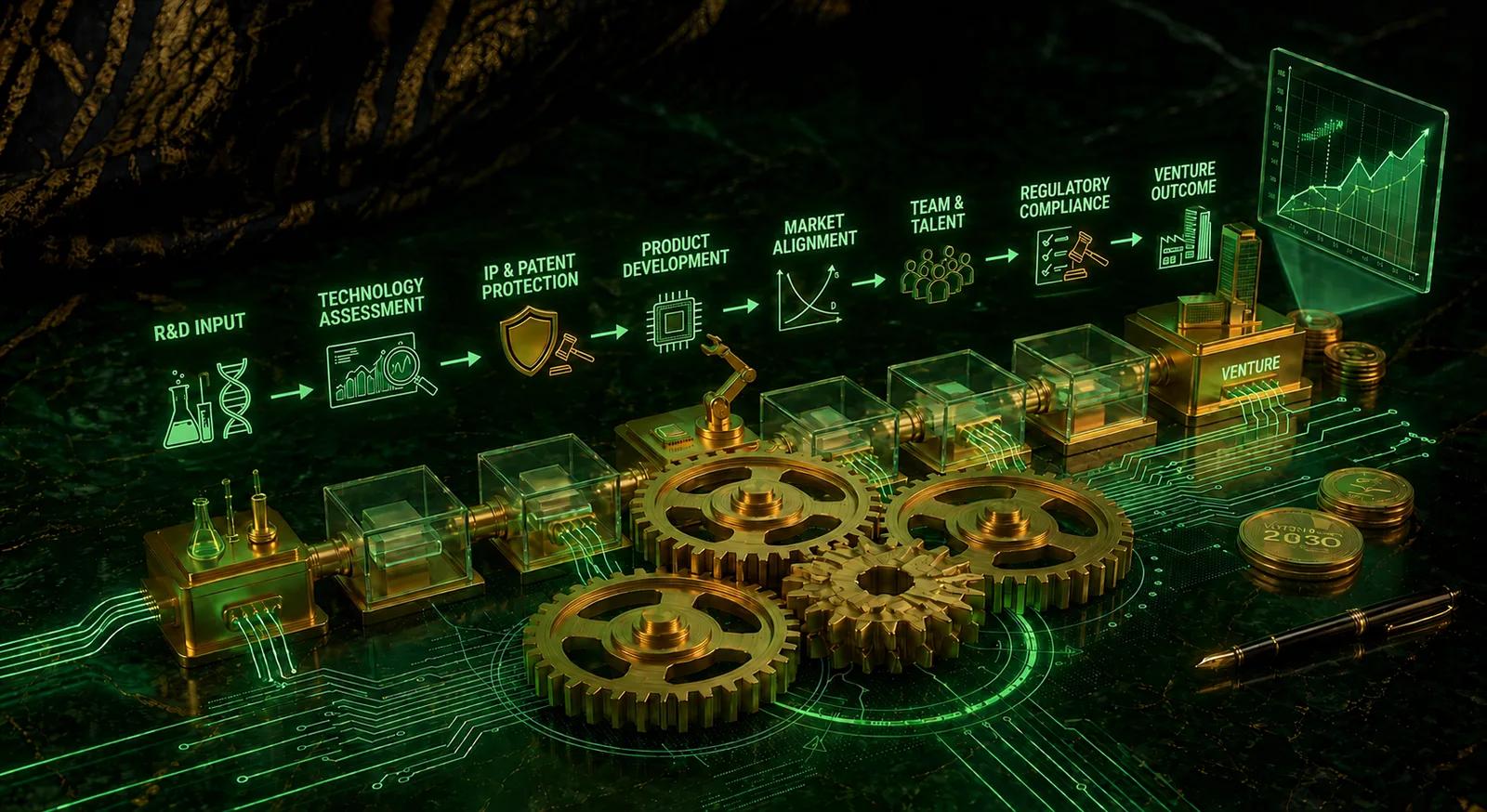
A deck can describe a large market, rapid growth, and strong demand. Diligence looks for the record behind each:
- Do revenue figures reconcile with the financial statements?
- Do customer numbers match commercial records?
- Can the burn rate and cash runway be explained from the accounts?
- Is the intellectual property owned by the company itself, rather than by a founder personally or a contractor not required to assign it?
- Are contracts and legal obligations documented and retrievable?
- Do the figures in the deck match management reporting and the data room?
Each question tests whether a slide corresponds to something recorded.
What investors assess beyond the opportunity
At Series A and beyond, what institutional venture and growth investors assess is not only the market opportunity but the organisation that will deploy the capital. The depth of that assessment scales with stage and cheque size; the categories do not:
- Ownership structure and cap table integrity
- Financial and operational data that reconciles
- Defined governance and decision rights
- Documented contracts and legal obligations
- Clear intellectual property ownership
- A team able to execute the plan
- Performance indicators tied to the business model
- Visibility over the use of capital
- An operating structure that can scale
These requirements are not uniform. A pre-Seed company is not assessed against Series B standards, and the same gap carries different weight at different stages. What does not change is that an answer must exist and be supportable when the question is asked.
This helps explain why two companies in the same market, with comparable growth, receive different responses. In our experience, the divergence often has less to do with the size of the opportunity than with the control a company holds over its own data, operations, and risk.
What the data room shows
A deck presents conclusions. A data room exposes the records they rest on: financial information, contracts, intellectual property, ownership structures, workforce data, legal obligations, commercial records, and controls.
A persuasive deck does not create inconsistencies, but it does raise the specificity of the claims diligence will test. A company that describes itself as ready to scale, then takes weeks to produce consistent financial data, has answered a question it did not intend to answer. A company presenting proprietary technology while its IP ownership remains unresolved carries a risk the technology slide does not address.
In our experience, a well-organised and current data room does more than reduce friction and delay. It is itself evidence that information is controlled and retrievable. Whether it is also consistent is what reconciliation then tests.
Readiness as an operating condition
Bisher & Partners treats investment readiness as an operating condition rather than a document exercise: information is verifiable, ownership is clear, processes are measurable, risks are identified, and decisions rest on records that hold up when examined.
This matters after the round as much as before. Diligence does not only inform a decision to invest or decline. It also surfaces the mechanisms through which a company will operate alongside institutional capital: how capital is deployed, who holds decision rights, how performance is measured, which risks are known, and what happens when the plan underperforms. Documentation cannot predict execution. It can show whether the structure for governing execution exists.
What to have ready before the round
No company needs the infrastructure of a listed enterprise before its first round. The appropriate level of maturity depends on stage, complexity, and funding objective.
The useful test before a raise is not whether the deck is strong, but whether every number, claim, and growth assumption can withstand the next question, and the one after. Where that holds, the deck describes a record that already exists rather than compensating for one that does not.
From opportunity to investability
The story creates interest. Evidence sustains it. Confidence follows when data, governance, operations, ownership, and forward expectations point the same way.
Beyond the earliest rounds, capital is not committed to a story. It is committed to the institution the story describes, and diligence is where the two are compared.