

Why Saudi Startups Fail Investor Due Diligence (And How to Fix It)
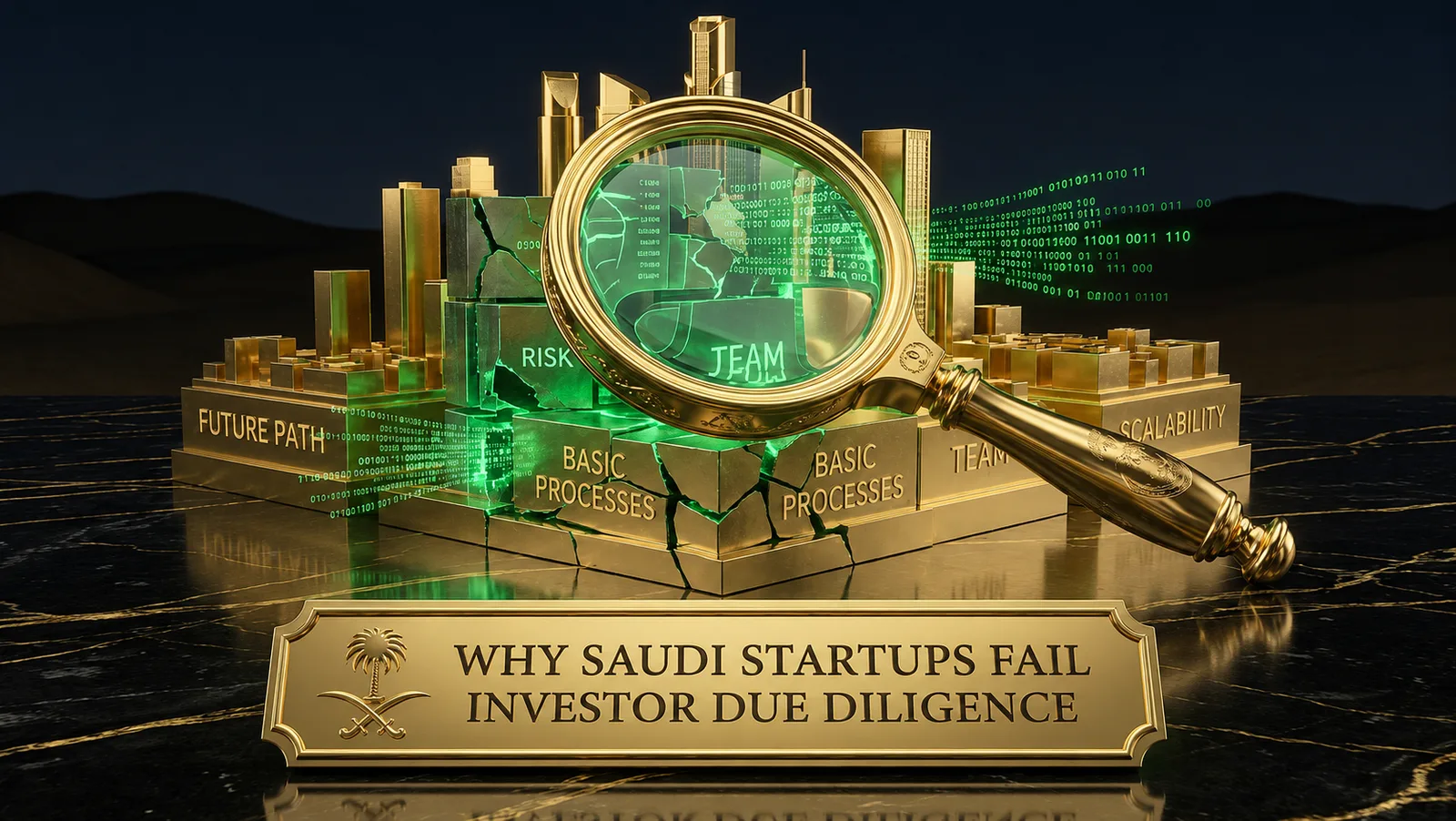
Saudi Arabia is no longer an emerging startup market. It is now one of the most active and competitive ecosystems in the region. With Vision 2030 accelerating innovation, venture capital firms expanding aggressively, and government-backed initiatives fueling growth, the opportunity has never been bigger for Saudi startups and startups in Saudi Arabia.
Yet, behind this growth lies a harsh reality: A large number of startups fail not at the pitch stage, but during Investor Due Diligence in Saudi Arabia. Deals that seemed promising suddenly fall apart. Conversations go silent. Term sheets never materialize.
And the reason is rarely what founders expect. It is not the idea. It is not the market. It is the structure of the company itself. This guide breaks down exactly why startups fail due diligence in Saudi Arabia and, more importantly, how to fix it before it costs you funding.
What Is Investor Due Diligence in Saudi Arabia
Investor due diligence is the final validation process before capital is deployed. In the Saudi ecosystem, venture capital due diligence in KSA has evolved into a highly structured and disciplined process. Investors are no longer betting on potential alone. They are validating risk, structure, and scalability.
During this process, investors examine the company across multiple layers:
- Legal foundation and ownership structure.
- Financial performance and projections.
- Governance and decision making.
- Operational readiness.
- Documentation and transparency.
This means one critical shift for founders: You are no longer pitching an idea; you are proving that your company is investable.
The "Ghosting" Effect: Why VCs Stop Calling After the First Meeting
Every founder knows the feeling: the first meeting was electric, the investor was nodding in agreement, and they asked for the data room. Then. Silence. This is what we call "Investment Ghosting." In the Saudi market, capital is sophisticated. VCs aren't just looking for a great app; they are looking for an "Institutional-Grade Asset." If an investor takes a quick peek behind the curtain and sees "Structural Fragility “handshake deals, messy cap tables, or undocumented IP, they won’t try to fix it for you. They will simply move on to the next deal. Ghosting is usually a sign that your internal infrastructure scared the capital away.
The Complete Breakdown of Why Saudi Startups Fail Due Diligence
1. Legal Structure Is Incomplete or Risky
Legal readiness is one of the first areas investors examine
Many startups underestimate how critical this is, especially in Saudi Arabia, where regulatory clarity matters
Common legal issues include
• No formal shareholder agreement • Unclear equity distribution between founders • Lack of intellectual property ownership documentation • Informal or undocumented founder arrangements
Why does this fail due diligence? Because it creates uncertainty around ownership, control, and future disputes
How to fix it
• Draft and formalize shareholder agreements early • Clearly define equity splits and roles • Ensure intellectual property is legally assigned to the company • Align structure with Saudi regulatory requirements
2. Financial Model Lacks Credibility
Your financial model is not just numbers; it is your company’s logic, yet many startups fail here because their models are either too optimistic or disconnected from reality, with typical issues including unrealistic assumptions, weak unit economics, and a lack of alignment with actual market conditions.
• Revenue projections without clear assumptions • No understanding of unit economics • Missing cost breakdown • Unrealistic growth curves
Why does this fail due diligence? Because investors cannot trust what they cannot understand
How to fix it
• Build a bottom-up financial model • Link revenue directly to operations • Clearly define cost drivers • Show realistic growth scenarios
3. Investor Data Room Is Missing or Weak
A structured investor data room for a Saudi startup is one of the most critical elements in due diligence
Many founders overlook this completely
Common mistakes include
• Documents stored across different platforms • Missing key files • No logical structure or categorization • Delays in sharing information
Why does this fail due diligence? Because it signals a lack of preparedness and weak internal organization
How to fix it
• Build a centralized data room • Organize documents into clear sections • Ensure all critical files are available • Keep everything updated and accessible
4. Lack of Governance and Decision Structure
Startups often operate informally in early stages, which is normal
But investors in Saudi Arabia increasingly expect structure
Common governance gaps include
• Undefined roles among founders • No decision-making framework • Lack of reporting structure • No accountability mechanisms
Why does this fail due diligence? Because it indicates operational instability
How to fix it
• Define roles and responsibilities clearly • Establish decision-making processes • Introduce basic governance practices • Create internal alignment
5. No Preparation for Due Diligence
Perhaps the most common issue is simple
Founders are not prepared
There is no startup due diligence checklist, no structured preparation, and no internal audit before fundraising
Why does this fail due diligence? Because everything becomes reactive instead of strategic
How to fix it
• Prepare before approaching investors • Conduct internal due diligence • Identify and fix gaps early • Build readiness as part of your growth strategy
The Ultimate Startup Due Diligence Checklist for Saudi Founders
If you are raising capital in Saudi Arabia, this checklist is your baseline
Legal Readiness
• Shareholder agreements are signed and structured • Equity ownership is clearly documented • Intellectual property is protected
Financial Readiness
• Financial model is realistic and detailed • Revenue and cost structures are clear • Unit economics are defined
Investor Readiness
• The data room is fully organized • All key documents are available • Investment narrative is consistent
Operational Readiness
• Roles and responsibilities are defined • Decision-making processes exist • Governance structure is in place
How to Build Investment Readiness Before Fundraising
The strongest startups do not wait for due diligence to start preparing; they build readiness early, which requires a shift in mindset from building a product to building a company, with key actions that make the business investment-ready.
• Structuring legal and financial foundations early • Aligning all business components • Preparing documentation proactively • Thinking from an investor perspective
This is what separates startups that raise capital from those that do not
The Competitive Advantage of Being Investment Ready in Saudi Arabia
In today’s Saudi market, capital is available, but it flows to the most prepared companies, and investment-ready startups benefit from faster fundraising, stronger valuations, and greater investor confidence.
• Faster fundraising cycles • Higher investor trust • Better valuation positioning • Stronger negotiation power
In many cases, readiness alone determines the outcome
From "Chaotic Startup" to "Institutional Asset": The 6-Week Transformation
The gap between where you are and where you need to be for a successful Investor Due Diligence Saudi Arabia can be closed faster than you think. At Horizon Studio, we don't just give advice; we build the infrastructure. Through our 6-week intensive sprint, we clean up your "Legal Debt," build a professional financial model, and curate a "Green" data room that makes investors feel safe. We transform your venture from a risky project into a fundable asset.
Conclusion
Saudi Arabia is full of opportunity, but opportunity does not guarantee funding. The real difference lies in preparation. Investor Due Diligence Saudi Arabia is not a barrier; it is a filter. It rewards those who are "Institutional-
If you are planning to raise capital in Saudi Arabia, do not wait until due diligence begins.
Book your Investability Diagnostic today at horizon.bishernp.com
Don't just be innovative, be prepared.
FAQs
Q1: How long does the Investor Due Diligence process typically take in Saudi Arabia?
In the Saudi VC ecosystem, the process usually spans 4 to 12 weeks. However, if a startup is not "Investment Ready," meaning their data room is disorganized, or their legal structure is unclear, this can stretch to 6 months or lead to a total deal collapse. Horizon Studio aims to cut this anxiety by preparing your entire infrastructure in just 6 weeks.
Q2: What is the most common legal "Red Flag" for Saudi VCs?
The most frequent red flag is "Legal Debt." This includes handshake equity agreements between founders, intellectual property (IP) still registered under a founder's personal name instead of the company, and non-compliance with the New Saudi Companies Law. Investors view these as high-risk liabilities.
Q3: Do I really need a formal Data Room for a Seed round in KSA?
Yes. While earlier rounds used to be more informal, the 2026 Saudi market is highly institutionalized. Whether it’s a Seed or Series A round, professional investors and Family Offices in Saudi Arabia expect a structured Investor Data Room. It signals that the founder is a "CEO" and not just a "Product Manager."
Q4: What is "Structural Fragility" in a startup?
Structural Fragility is a term we use at Horizon Studio to describe a company that has a great product but a weak foundation. This usually involves "messy" Cap Tables, a lack of financial governance, and undocumented operational processes. It is the #1 reason why promising Saudi startups fail during the final stages of a deal.
Q5: Can a startup fix its structure while actively fundraising?
It is possible, but extremely risky. Fixing the foundation while pitching to VCs is like trying to repair a plane's engine while flying. It’s much more effective to undergo a Readiness Sprint before hitting the market to ensure you maintain a position of strength during negotiations.