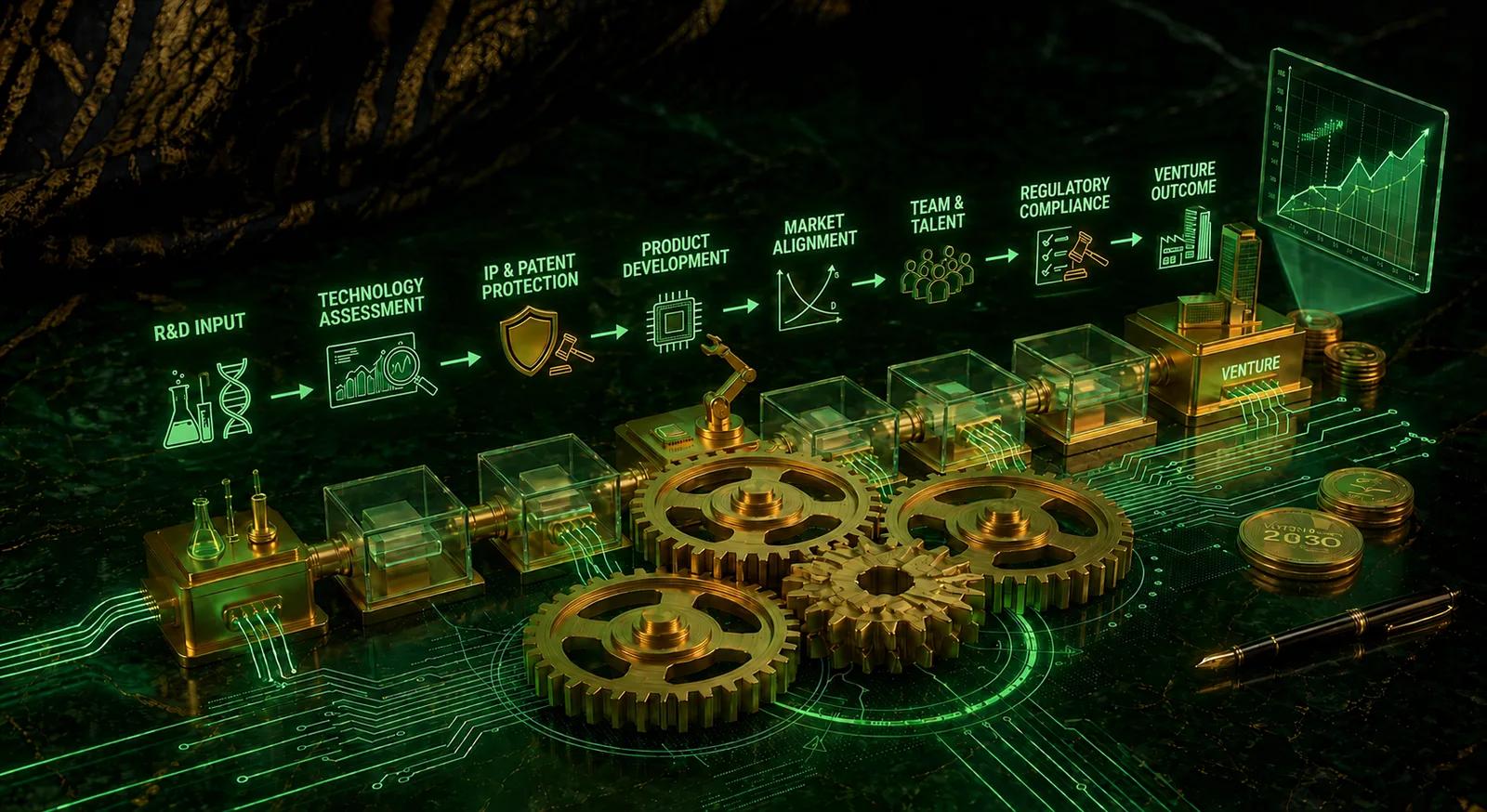

Cost of Weak Institutional Structures in Nonprofits

In the world of social impact, we often fall in love with the mission and neglect the machine. We launch nonprofits with hearts full of passion, driven by a noble desire to change lives and contribute to the flourishing of our communities. In Saudi Arabia, this passion is the primary engine behind the thousands of NGOs blossoming under the umbrella of Vision 2030. However, a hard, institutional truth remains: Passion might start the engine, but a robust nonprofit organizational structure is the fuel that ensures you reach the finish line.
As the Kingdom transitions from traditional "charity" to a high-impact "Third Sector," nonprofits are entering a phase of institutional puberty. It is no longer enough to be a "charity" doing good deeds; you must be a "development institution" managed with the efficiency of a corporation, the transparency of a financial firm, and the agility of an international NGO.
The real challenge facing leaders today is not a lack of resources; the government has opened unprecedented doors for funding and empowerment, but rather the "Hidden Invoice" paid by organizations trying to build massive social dreams on top of a fragile nonprofit organizational structure. This article dives deep into why "fixing the administrative engine" is now more critical than "increasing production," and how structural gaps are quietly draining the lifeblood of otherwise great organizations.
The Hidden Problem Behind Nonprofit Struggles
In Saudi Arabia, the shift toward professionalization means that passion-driven leadership is meeting a wall of regulatory and operational complexity. The visible effort of an NGO its food drives, its training workshops, its social campaignsis just the tip of the iceberg. Beneath the surface lie the NGO structure problems that quietly dictate whether an organization will thrive or merely survive.
Many organizations suffer from what we call "Operational Drift." They focus 90% of their energy on external programs and only 10% on internal systems. This imbalance creates a "Black Hole" effect where resources are consumed by internal friction rather than external impact. Nonprofit management issues like these don't cause a sudden crash; instead, they create a gradual accumulation of inefficiencies. You find your team working twice as hard to achieve average results, and daily life becomes a cycle of "firefighting" instead of strategic planning.
What is a Nonprofit Organizational Structure and Why It Matters?
Think of your organizational structure as the "Operating System" (OS) of your NGO. It defines how information flows, how decisions are made, and who is accountable to whom. Without a solid OS, even the best "applications" (your programs) will lag or crash.
The Four Pillars of a Strong Structure:
- Governance Frameworks: The clear rules governing the relationship between the Board of Directors and the Executive Management.
- Leadership Roles & Authority: Defining who has the right to decide and who has the responsibility to execute.
- Financial Systems: Beyond bookkeeping, this is about transparency, compliance with IFRS, and donor-grade reporting.
- Operational Processes: The "blueprint" of how a project moves from a creative idea to a measurable social impact.
Why Structure Is the Cornerstone of Impact
A strong nonprofit organizational structure acts as a force multiplier. It allows an organization to:
- Make Evidence-Based Decisions: Because data flows through clear channels.
- Maintain Accountability: There is no place to hide behind vague job descriptions.
- Enhance NGO Performance: Every Riyal spent is optimized for maximum social return.
- Ensure Sustainability: The organization becomes bigger than any single individual.
The Real Cost of Weak Institutional Structures
A weak structure is not just an administrative nuisance; it is a financial and strategic liability. Here are the five major costs:
1. Operational Inefficiency (The Institutional Friction)
Operational inefficiency of an NGO is perhaps the most immediate cost. When lines of authority are blurred, "Institutional Friction" occurs. Projects that should take a month drag on for six due to unnecessary bureaucracy or a lack of delegated authority.
- Task Duplication: Two departments are working on the same thing because of a lack of structural coordination.
- Resource Leakage: Time, money, and talent are wasted on "correcting" errors that shouldn't have happened in a structured environment.
2. The Trust Gap: Loss of Funding Opportunities
In the modern philanthropic landscape, the "Smart Donor" (government entities, CSR departments of major corporations, or international foundations) doesn't fund a "sad story," they fund "institutional capacity." Structural gaps create a trust deficit. If a donor cannot see a clear governance framework or a transparent financial system, they perceive the organization as a "high-risk" investment. Consequently, NGOs lose out on millions of Riyals in potential grants not because their mission is weak, but because their "house" isn't in order.
3. The Founder’s Trap: Weak Decision Making
Many Saudi NGOs suffer from "The Founder’s Trap" or extreme centralization, where every minor decision must pass through the CEO or Board Chairman. This is a classic nonprofit management issue.
- The Result: Opportunities are missed, staff feel disempowered, and the organization’s response to urgent social needs is painfully slow.
4. The Glass Ceiling: Limited Scalability
You can run a local neighborhood initiative with a loose structure, but you cannot run a national-scale program. Nonprofit scalability requires systems that can be replicated. Without a strong structure, expansion becomes a nightmare; quality drops, the brand is diluted, and the team becomes overwhelmed.
5. Reputational Risk and Credibility Crisis
Credibility is the only currency that matters in the Third Sector. NGO structure problems eventually lead to external failures, such as a missed compliance deadline, a financial discrepancy, or a failed project. In a hyper-connected Saudi society, one structural failure can tarnish a reputation that took decades to build.
The Psychological Toll on Talent and Retention
An often-overlooked cost of a weak structure is its impact on human capital. Saudi Arabia’s youth are highly educated, professional, and ambitious. They want to work in environments that respect their time and talent. When an organization has a chaotic structure, it creates a "Toxic Ambiguity." The best talent, those who crave clarity and results, will be the first to leave. You are left with a culture of mediocrity where "staying safe" is more important than "creating impact." Strengthening your organizational development NGOs is, in reality, your best talent retention strategy.
The Digital Dimension of Modern Structure
In the age of Vision 2030, a "structure" is no longer just an org chart on a piece of paper; it is a digital ecosystem. A modern nonprofit organizational structure must integrate technology into its DNA.
- Digital Governance: Real-time tracking of board decisions.
- Cloud-Based Finance: Ensuring transparency at the click of a button.
- Impact Data: Automated systems to measure and report social ROI. Organizations that fail to "digitalize" their structure will find themselves obsolete in an increasingly tech-driven Saudi ecosystem.
Why This Matters More in Saudi Arabia Today
The nonprofit sector in the Kingdom is under the microscope of the National Center for Non-Profit Sector (NCNP). The expectations are clear:
- Professionalism: Operating with the discipline of the private sector.
- Transparency: Absolute clarity on fund sourcing and spending.
- Impact: Delivering tangible, data-backed results for society. Weak structures are no longer just "internal problems,"they are now "regulatory risks."
Conclusion: From Mission to Institution
The cost of a weak institutional structure is often invisible until it’s too late. It is the silent leak in the ship that eventually leads to a wreck. Success in the social sector is not just about what you do (the mission), but how you are built (the institution). Organizations that choose to invest in their nonprofit organizational structure today are the ones that will lead the impact tomorrow. They are the ones who will secure the biggest grants, attract the best talent, and leave a lasting legacy in the history of Saudi Arabia's transformation.
Ready to Strengthen Your Institutional Foundation?
Sustainable growth is not an accident; it is engineered. Don’t let structural gaps limit your vision or drain your resources. The NGO Qualification Program (NGOQ) by B&P is specifically designed to help Saudi nonprofits transition from informal initiatives to high-performing institutions. We help you build:
- Robust Governance Frameworks that satisfy regulators and donors.
- Advanced Financial Systems to ensure transparency and trust.
- Operational Excellence to maximize your social return on investment.
Take the Next Step Toward Excellence:
- Book a Free Diagnostic Session: Identify your organization’s "Readiness Gaps" today.
- Get Your Funding Readiness Assessment: See your organization through the eyes of a donor.
- Join the elite circle of qualified Saudi NGOs leading the way to 2030.
[Contact Us Today - Engineering the Future of Development]
• Website: www.bishernp.com
• Email: contact@bishernp.com
FAQs
- Why should we focus on "Structure" if our mission is already successful?
A successful mission is the result of passion, but a strong nonprofit organizational structure is what makes that success sustainable. Without a solid structure, your organization will eventually hit a "growth ceiling" where operational inefficiencies and high staff turnover begin to drain your resources. We help you build a foundation that supports your growth rather than limiting it.
- How does the NGOQ program specifically help us secure more funding?
Most donors, especially international foundations and large CSR departments, have strict "Institutional Readiness" requirements. Our program develops a Ready-to-Pitch Dossier for your organization. This includes audited-grade financial systems, clear governance frameworks, and impact measurement tools that prove to donors you are a low-risk, high-return investment.
- How long does the qualification journey take?
The transformation typically takes between 4 to 6 months. This isn't just a "training course"; it is a deep institutional overhaul. We spend time diagnosing your specific gaps, designing custom frameworks, and most importantly, working on-ground with your team to ensure these systems are fully activated.
- Is this program compliant with the National Center for Non-Profit Sector (NCNP) and Vision 2030?
Absolutely. Our methodology is built specifically around the regulatory landscape of Saudi Arabia. We ensure that your governance models and transparency standards not only meet but exceed the requirements set by the NCNP, positioning you as a leading partner for Vision 2030 initiatives.
- Is this just another set of consulting reports that will sit on a shelf?
No. That is the "Traditional Consulting Trap" we avoid. Our "Transformation Squads" work directly with your staff. We don’t just give you a manual; we stay to ensure your team knows how to use the new financial software, how to run a board meeting under the new governance rules, and how to manage the Dossier. We measure our success by your activation, not your documentation.
- What is the expected Return on Investment (ROI) for this program?
We view the NGOQ program as a strategic investment. Based on our financial model, organizations that complete the qualification typically see a 10x return on their investment by unlocking access to large-scale grants and international funding opportunities that were previously out of reach due to structural gaps.
- How do we start the process?
The journey begins with a Complimentary Diagnostic Session. We perform a high-level scan of your current governance, financial, and operational systems to identify your "Readiness Gaps." From there, we provide a customized roadmap for your institutional transformation.